AI accelerates learning — that’s for sure. But real impact comes from how people use it. Research shows AI delivers the greatest value when it reduces friction, enhances creativity and sharpens human judgement, rather than replacing it. At Artgym, we see AI adoption as essential — but success depends on treating it as a cultural challenge, not a technological one. When embedded into the collective mindset, practices and behaviors of a workforce, AI becomes a powerful enabler of performance. In this article, we explore why and how.
AI is no longer novel — it is becoming operational
Artificial Intelligence (AI) is now firmly embedded in organizational life. From predictive analytics to content generation, leaders and Learning & Development (L&D) teams are surrounded by claims about what AI can do. Yet for many organizations, a gap remains between experimentation and real, sustained impact.
At Artgym, we believe this gap exists because AI adoption is often treated as a technology initiative, when in reality it represents a cultural and behavioral transformation. The real question is no longer whether organizations should adopt AI, but how it is integrated into the mindsets, behaviors and practices that shape human performance.
Recent research by Donald Taylor shows that more than half of organizations are already using AI in some capacity, with L&D teams deploying it across design, development and operational workflows. What began as experimentation has quickly become part of everyday practice.
AI is proving particularly effective in areas that have historically absorbed disproportionate amounts of L&D effort:
- Drafting learning content and assessments
- Generating scripts, summaries and translations
- Synthesizing learner feedback and performance data
In short, AI excels at work that does not require judgement, contextual understanding or relational sensitivity. From an Artgym perspective, this distinction matters. These are precisely the activities that slow teams down and pull focus away from the deeper work of shaping culture, enabling leadership and supporting behavior change. Used well, AI reduces friction — freeing human attention for where it matters most. For L&D leaders, the implication is clear: AI value is created not at the level of tools, but at the level of behavior.
From content creation to performance influence
The most significant shift highlighted in the research is a move beyond content creation toward outcome influence. Early uses of AI focused on producing more learning materials, faster. Increasingly, organizations are applying AI to:
- Personalize learning pathways
- Identify skills and capability gaps
- Support adaptive and in-flow learning
- Connect development activity to business outcomes
This aligns closely with a long-held Artgym belief: learning is not a one-off event — it is a behavioral process that happens in the flow of work. Learning only creates value when it translates into observable changes to people’s way of thinking, behaving and collaborating. While AI can surface patterns and insights at scale, connecting learning to performance still depends on human sense-making, empathy and contextual judgement.
The research suggests that AI delivers the greatest value when it moves from production to intelligence — helping people to interpret data, identify meaningful signals and focus their human effort more effectively. Crucially, this means using data not to replace creativity and critical judgement, but to strengthen it.
Human + AI: Designing for performance, not just efficiency
A consistent theme across the evidence is that speed and efficiency alone do not create impact. AI can accelerate outputs, but value only emerges when those outputs lead to sustained behavioral change.
At Artgym, we see three areas where AI most effectively augments human capability:
1. Reducing cognitive load
AI can absorb repetitive and administrative tasks — transcribing sessions, tagging competencies and synthesizing qualitative feedback — allowing humans to focus on facilitation, interpretation and behavioral design.
2. Personalizing development at scale
Data-driven recommendations can tailor learning experiences, but human facilitators remain essential for interpreting context, adjusting intent and creating psychological safety — the conditions in which learning actually sticks.
3. Linking learning to outcomes
AI can highlight trends and predict skill gaps, but translating insight into systemic change requires deep understanding of organizational dynamics, leadership behavior and cultural norms — the core focus of Artgym’s behavioral science approach.
In this sense, AI works best not as a substitute for human expertise, but as a multiplier of it.
Why more AI is not always better
This point is reinforced by broader research into knowledge work and creativity. Professor Bent Flyvbjerg has warned of the risks of outsourcing intellectual and creative production to systems that sound confident while lacking an understanding of truth. Much of today’s AI, he argues, optimizes for plausibility rather than accuracy — making it persuasive, but not inherently reliable.
Other studies challenge the assumption that increasing AI involvement automatically improves outcomes. Research by Lewis Garrad and colleagues identified a clear “Goldilocks effect” in creative problem-solving: moderate collaboration with AI enhanced performance, while both minimal use and heavy reliance reduced it. Follow-up field studies in creative industries produced the same pattern.
For leaders, the message is unambiguous. AI delivers the greatest value when it acts as a catalyst for human thinking, not a replacement for it. Over-reliance dulls judgement; under-use misses opportunity. Balance matters.
What people actually want from AI at work
A 2025 Stanford study examining the future of work with AI agents adds an essential human perspective. While nearly half of workplace tasks were identified as suitable for automation, employees showed consistent resistance to handing over work that involves creativity, judgement or interpersonal connection.
Crucially, workers were not seeking removal from the equation. Their motivation was to automate low-value, repetitive or stressful tasks in order to focus on more meaningful and fulfilling work. Yet many organizational investments in AI remain misaligned with these preferences, concentrating on automating relational tasks that people value — such as customer interaction — while leaving genuinely tedious work untouched.
The lesson is subtle but critical: successful AI adoption preserves human agency. People want collaboration with technology, not displacement by it.
AI adoption is a cultural transformation
Taken together, the evidence points to a simple conclusion. AI success does not hinge on tools alone, but on the cultural conditions in which those tools are used.
When organizations struggle with AI, it is rarely because the technology fails. It is because mindsets, practices and incentives remain unchanged.
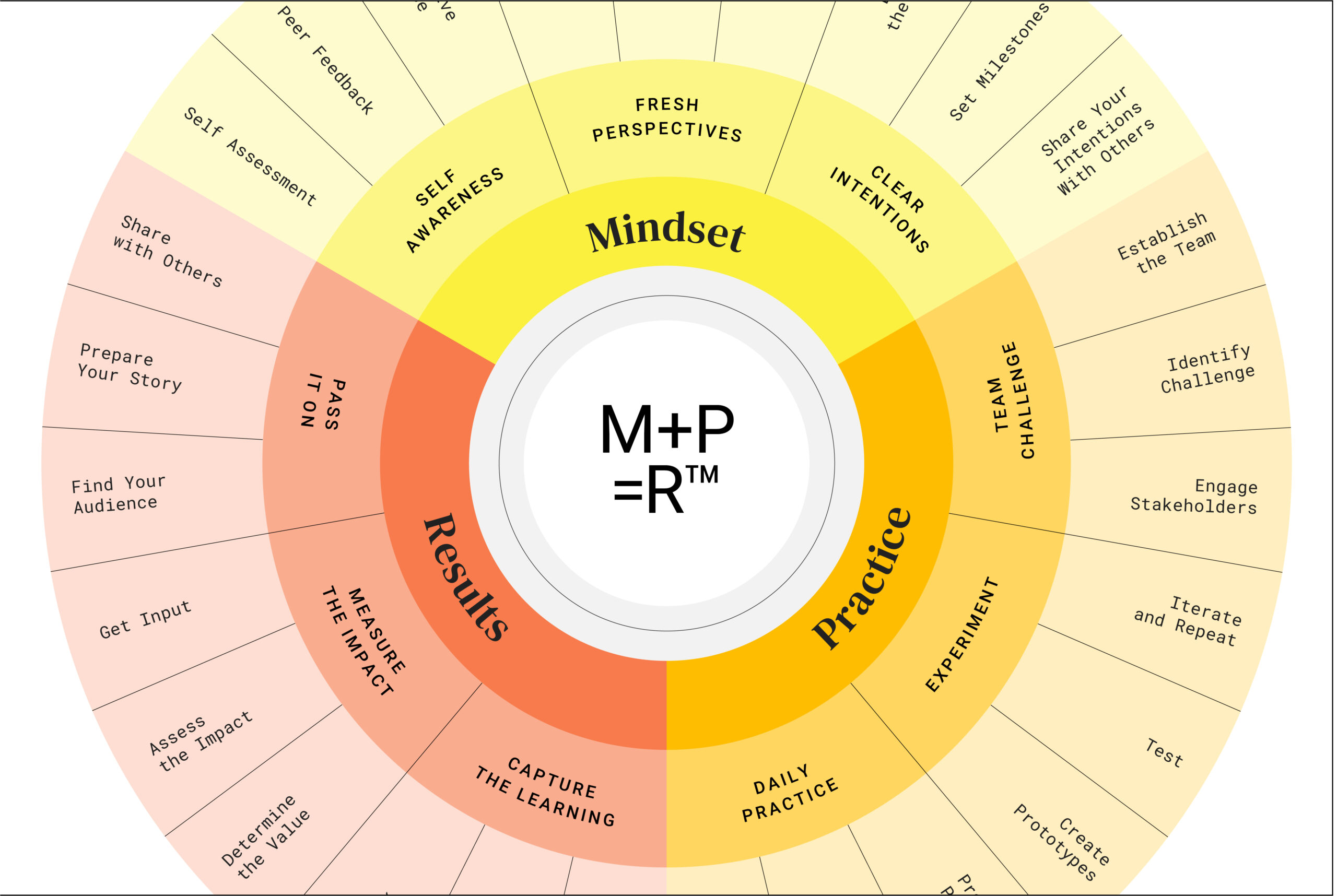
From an Artgym perspective, AI adoption succeeds or fails across three dimensions:
- Mindset — how leaders frame AI: as control, efficiency and replacement, or as enablement, learning and augmentation.
- Practice — how AI is embedded into everyday work, decision-making and development.
- Results — whether AI use leads to meaningful behavioral change and improved performance.
Seen through this lens, AI is not an IT rollout. It is a cultural challenge that every organizational leader must take on.
Looking ahead: Human-led AI for better outcomes
AI’s role in L&D is moving rapidly from hype to practical influence. The organizations that benefit most will not be those that deploy the most advanced tools, but those that integrate AI thoughtfully into how people think, learn and work together.
At Artgym, we use AI to do what technology does best — process, analyse and predict at speed — so that humans can focus on what they do best: envision futures, build relationships, exercise ethical judgement and collaborate creatively. AI accelerates. Humans steward. Together, that combination becomes a powerful force for performance.
Conclusion
AI will continue to reshape learning systems and organizational workflows. But its ultimate value lies not in automation alone, but in how effectively it amplifies human thinking, behavior and collaboration.
For leaders, the challenge now is not speed of adoption, but quality of integration. The organizations that will thrive are those that use AI to deepen judgement, strengthen collaboration and reinforce human agency — not dilute it.
Organizations that succeed will be those that treat AI as a partner in human development, not a shortcut past it. For those shaping the future of work, that is where real impact will be found.
References
How Big Things Get Done: The Surprising Factors That Determine the Fate of Every Project (Bent Flyvbjerg, Dan Gardner, 2023). London: Penguin Random House.
Unlocking creativity with artificial intelligence (AI): Field and experimental evidence on the Goldilocks (curvilinear) effect of human-AI collaboration (Hsuan-Che Brad Huang, 2025). Available at: https://pubmed.ncbi.nlm.nih.gov/41051839/
Future of Work with AI Agents: Auditing Automation and Augmentation Potential across the U.S. Workforce (Stanford Social and Language Technologies lab, 2025). Available at: https://futureofwork.saltlab.stanford.edu/
AI in Learning and Development: The Race for Impact. London (Donald H Taylor, 2025). Available at: https://donaldhtaylor.co.uk/the-research-base/